


Consider the following six points when selecting a pressure transmitter
Sep 23, 2026
1. Confirm the pressure value to be measured.
When selecting a pressure transmitter, fully consider the pressure range, accuracy, and stability.
2. Determine the medium to be measured.
When selecting a pressure transmitter, consider the medium being measured. Viscous liquids or slurries can clog pressure ports, while solvents or corrosive substances might damage the materials within the transmitter that come into direct contact with the medium. These factors determine whether a flush diaphragm pressure transmitter or the pressure transmitter with specific wetted materials are required.
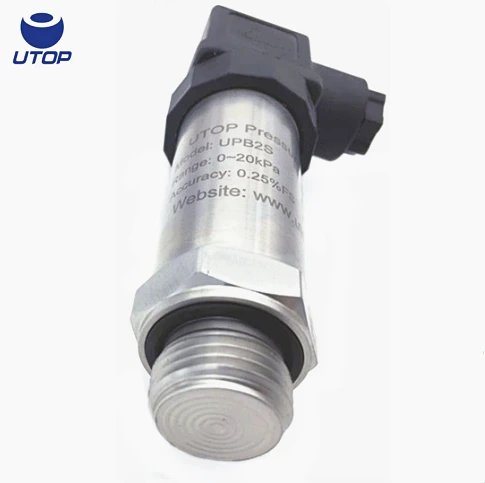

Standard pressure transmitters typically use 316 stainless steel for wetted parts. If your medium is non-corrosive to 316 stainless steel, virtually any pressure transmitter will be suitable for your application. If the medium is corrosive to 316 stainless steel, a chemical seal should be used; this allows for pressure measurement while effectively preventing the medium from contacting the transmitter's wetted parts, thereby protecting the device and extending its service life.
3. Determine the transmitter's accuracy.
Pressure transmitter's accuracy is influenced by factors such as non-linearity, hysteresis, non-repeatability, zero-point offset, and temperature effects. However, it is primarily determined by non-linearity, hysteresis, and non-repeatability; generally, higher accuracy comes with a higher price.
4. Determine the pressure transmitter's temperature range.
Pressure transmitters is usually rated for two temperature ranges: the normal operating temperature range and the temperature compensation range. The normal operating temperature range refers to the range within which the transmitter functions without damage; if the temperature exceeds the compensation range, the device may fail to meet its specified performance metrics.
The temperature compensation range is typically narrower than the operating temperature range. Operating within this range ensures the transmitter meets its specified performance standards. Temperature affects the transmitter's output in two ways: zero-point drift and full-scale output.
5.Determining the transmitter's output signal
The choice of output signal depends on several factors, including the distance between the transmitter and the system controller or display, the presence of "noise" or other electronic interference, and whether an amplifier is required (and its placement).
For many applications where the distance between the transmitter and the controller is short, a transmitter with a milliampere (mA) output is an economical and practical choice.
Currently, due to diverse data acquisition requirements, the market offers a wide range of output signals for pressure transmitters-such as 4–20 mA, 0–20 mA, 0–10 V, and 0–5 V-with 4–20 mA and 0–10 V being the most commonly used.
For details, please contact Qi Huang.


