


Integrated Level Transmitter: An Integrated Design and Preferred Choice for Industrial Level Monitoring
Sep 23, 2026
In sectors such as industrial fluid monitoring, water conservancy, chemical storage, and wastewater treatment, the accurate and stable acquisition of liquid level data serves as the fundamental basis for automated equipment operation and safety management. Thanks to its highly integrated structure, the integrated level transmitter eliminates the drawbacks associated with traditional split-type systems-such as cumbersome wiring, complex installation, and high failure rates-making it a mainstream solution for industrial level detection that is widely adaptable to both standard and complex operating environments.
The core advantage of the integrated level transmitter lies in its unified design, which combines the sensing unit, signal processing module, transmission circuitry, and protective housing into a single, compact, and orderly unit, eliminating the need for external auxiliary modules. Compared to split-type transmitters, this device removes the need for intermediate wiring and module interconnections; this hardware-level simplification reduces the likelihood of common issues such as loose connections, signal interference, and connector degradation, thereby significantly enhancing operational stability and durability. The device features a sealed protective structure-with most models achieving an IP67 rating or higher-effectively resisting external factors like dust, moisture, and occasional immersion, making it suitable for a wide range of indoor and outdoor industrial settings.
Regarding its operating principle, the level transmitter utilizes high-precision sensing elements to detect real-time changes in liquid levels and converts physical level signals into standard analog electrical signals. After undergoing internal filtering, amplification, and calibration, the device outputs a stable signal that can interface directly with automation control systems-such as PLCs, industrial PCs, and data loggers-enabling real-time data transmission and remote monitoring. Each level transmitter undergoes multi-point precision calibration before leaving the factory, ensuring excellent measurement linearity and controlled error margins to meet the demands of routine, high-precision industrial monitoring.
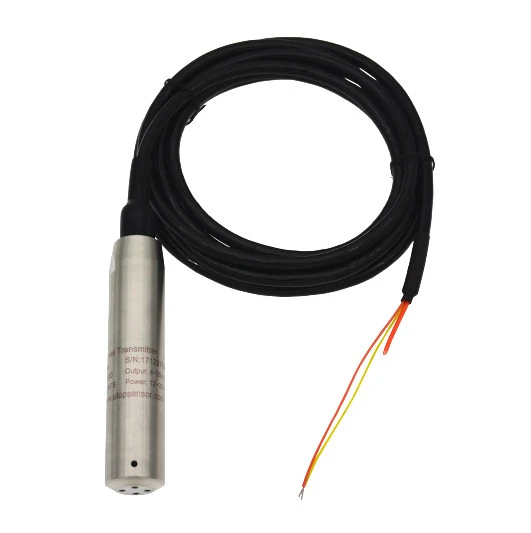
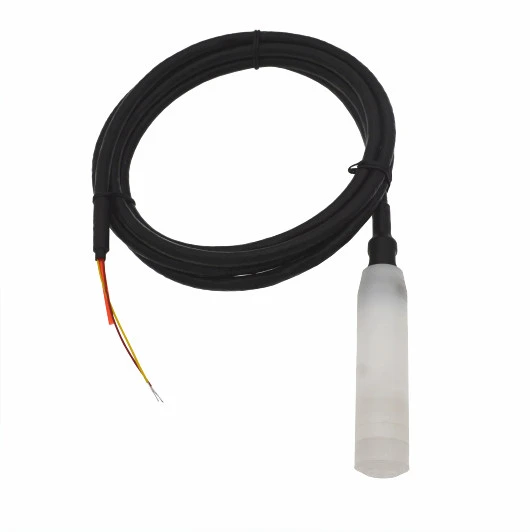
The device also offers significant advantages in installation and maintenance, supporting various mounting methods-including submersible, flange, and threaded connections-to accommodate diverse equipment configurations such as storage tanks, reservoirs, pipelines, and reaction vessels. Its streamlined, integrated design significantly simplifies installation, eliminating the need for complex professional wiring or calibration, thereby substantially reducing labor costs and installation time. Routine maintenance is straightforward and efficient-requiring no disassembly of multiple modules-and involves only periodic cleaning of the sensor probe and checks of the housing seal, making it well-suited for standard industrial maintenance schedules.
In terms of operational versatility, the integrated level transmitter is compatible with a wide range of media, including clean water, wastewater, mildly corrosive chemical liquids, and oils; by swapping in probes made of specialized materials, it can also meet the demands of challenging environments involving acids, alkalis, high temperatures, or high pressures. With low power consumption, the device is ideal for long-term, continuous operation, providing stable, round-the-clock level data to support production control, level alerts, and volume calculations. Characterized by its integration, high stability, and ease of maintenance, the device consistently facilitates the automation of industrial level monitoring and serves as a core component in industrial fluid management.
For details, please contact Qi Huang


