
What precautions should be taken when operating a pressure transmitter?
Feb 10, 2026
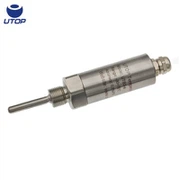
A pressure transmitter mainly consists of three parts: a pressure sensor, a measurement conversion circuit, and process connection components. Its function is to convert the physical pressure parameters of gases and liquids from the pressure sensor into a standard electrical signal.
The following precautions should be taken when using a pressure transmitter:
1. Check for signal interference around the pressure transmitter.
If there is such signal interface, eliminate it as much as possible, or connect the sensor shielding wire to a metal housing to enhance anti-interference capabilities.
2. Clean the mounting hole regularly.
To make sure the mounting hole is clean and prevent the pressure transmitter from contacting corrosive or overheated media.
3. Measure gas pressure
When measuring gas pressure, the pressure fitting should be opened at the top of the process pipeline, and the transmitter should also be installed at the top of the process pipeline so that accumulated gas can be easily injected into the process pipeline.
4. Power supply required
Voltages above 36V should not be used on the pressure transmitter, as this can easily cause damage.
5. Measure high temperature media
When measuring steam or other high-temperature media, a condenser, such as a buffer tube, is required on the high temperature pressure transmitter. The transmitter's operating temperature should not exceed the limit. Furthermore, the buffer tube needs to be filled with an appropriate amount of water to prevent overheated steam from contacting the transmitter. Additionally, the buffer tube should not leak air.
6. Measure liquid pressure
When measuring liquid pressure, the pressure(level) transmitter should be installed in a location that avoids liquid impact (water hammer) to prevent pressure damage to the sensor.
For details, please contact Qi Huang: qihuang@utopsensor.com