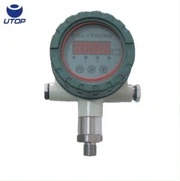

How should pressure transmitters be maintained?
Oct 14, 2025
I. Basic Cleaning
Surface Cleaning: Weekly wipe the silicon pressure transmitterhousing with a dry, soft cloth to prevent dust and grease accumulation. For corrosive media adhering in chemical environments (e.g., crystallised acid/alkali solutions), dampen a soft cloth with a neutral cleaner (pH 6–8) and wipe. Never use abrasive tools like steel wool to avoid scratching the stainless steel housing and causing corrosion.
Interface Cleaning: Quarterly inspect threaded interfaces (e.g., M20×1.5) for residual media. Should blockages occur, flush with a solvent compatible with the medium (e.g., clean water for water-based media, kerosene for oil-based media), then dry thoroughly with compressed air to ensure sealing integrity.
II. Periodic Calibration
Calibration Interval: Basic calibration is recommended every six months.
III. Environmental Protection
Moisture Protection: In humid environments (e.g., reservoir water level monitoring), inspect the transmitter junction box seal monthly for ageing. If water ingress is detected, immediately replace the seal (recommended material: fluororubber, temperature range -20°C to 200°C) and dry the circuit board using a hot air gun.
High-Temperature Damage Prevention: For high-temperature scenarios (>85℃) such as steam pipelines, ensure the condensation coil of the high temperature pressure transmitter is intact and sufficiently wound (add one additional coil for every 10℃ increase in ambient temperature).
IV. Fault Diagnosis
No Output Signal: First verify power supply (24V±10%). If voltage is normal, a circuit board fault may exist requiring factory repair.
Significant Output Fluctuation: Investigate on-site vibration sources (e.g., pump units) and install vibration-damping brackets. If the medium contains particulates, replace with a flat diaphragm sensor.
Excessive Error: Verify whether the pressure exceeds the pressure range. If prolonged overload occurs, replace with a model featuring a larger measurement range.
For more information, please contact Qi Huang: qihuang@utopsensor.com.