
why UTOP design high temperature pressure transmitter?
Jun 25, 2026
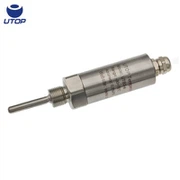
It is well known that in the field of pressure measurement, pressure transmitters cannot directly contact with high-temperature media. Prolonged exposure to high temperature media can cause zero drift, sensitivity degradation, or even chip softening in the pressure-sensitive elements, ultimately damaging the pressure transmitter. The core challenge in designing a pressure transmitter capable of measuring high-temperature media lies in thermal isolation and cooling. Since conventional diffused silicon or MEMS sensitive chips cannot directly contact with ultra-high-temperature media such as steam or heat transfer oil, specialized mechanical structures and material processing are required. to address this, UTOP has specifically designed the UPB8 pressure transmitter for high-temperature media measurement. This transmitter features a stainless steel heat-dissipation structure (heat sink part) with increased surface area to enhance convective air cooling. By extending the thermal conduction path between the sensor's pressure-sensing section and the electronic circuitry, the medium temperature is rapidly reduced, preventing direct contact between excessively hot media and the transmitter diaphragm. This design ensures stable and accurate pressure measurement of high-temperature media.
The number of heat sinks varies depending on the medium temperature; generally, the higher the medium temperature, the greater the number of heat sinks required. Additionally, customers can install condensation tubes on the cooling device according to their specific applications to reduce damage to the transmitter caused by excessive temperatures.

UTOP's UPB8 high-temperature pressure transmitter can measure liquids or gases at temperatures up to 240℃. If you are interested in this product, please feel free to contact us for a quote!