
How does a 2-wire 4–20 mA pressure transmitter simultaneously provide power and transmit a signal?
Apr 24, 2026
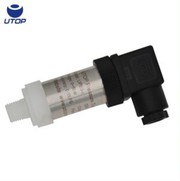
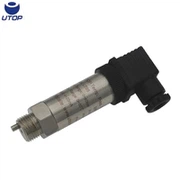
Structurally speaking, a two-wire 4–20 mA pressure transmitter consists of three main components: a sensor, a signal conditioning circuit, and a two-wire voltage-to-current (V/I) converter. The sensor converts physical quantities-such as temperature or pressure-into electrical parameters. The signal conditioning circuit then amplifies and conditions the weak or nonlinear electrical signals output by the sensor, converting them into a linear voltage output. The two-wire V/I conversion circuit regulates the overall current consumption based on the output of the signal conditioning circuit; simultaneously, it draws voltage from the loop and regulates it to provide power to both the conditioning circuit and the sensor.
The operating principle of a two-wire pressure transmitter relies on utilizing the 4–20 mA signal loop to provide power for its own operation. If the transmitter's internal power consumption exceeds 4 mA, it becomes impossible to output the lower-limit value of 4 mA. Consequently, a general requirement for two-wire transmitters is that their internal power consumption-encompassing the entire circuitry, including the sensor-must not exceed 3.5 mA. This constitutes one of the fundamental design principles for two-wire transmitters.
Through ingenious circuit design, a two-wire 4–20 mA pressure transmitter utilizes just two wires to simultaneously provide power and transmit signals. Its core principle lies in leveraging the 4–20 mA current signal itself to power the sensor while concurrently transmitting measurement data.
Working Principle of a 2-Wire 4–20 mA Strain Gauge Pressure Transmitter: Internal signal conditioning circuitry and a voltage-to-current (V/I) converter within the sensor convert physical parameters (such as pressure or temperature) into a 4–20 mA current signal. This signal serves simultaneously as the power source to drive the sensor's operation and-by passing through a load resistor-is converted into a voltage signal for readout by external devices. For instance, when the output is 4 mA, a portion of the current is utilized to power the device, while the remainder transmits the signal.
Advantages: This design simplifies wiring and reduces costs, making it particularly suitable for long-distance transmission and hazardous (explosion-proof) environments. For instance, when a pressure transmitter is installed on a gas storage tank, only two wires are required to connect it to a PLC to handle both power supply and data transmission.
For details, please contact Qi Huang: qihuang@utopsensor.com