

How does an oil level sensor communicate with the vehicle's computer?
Jan 21, 2026
Hey there! As a supplier of Oil Level Sensor, I've been getting a lot of questions about how these nifty little devices communicate with a vehicle's computer. So, I thought I'd break it down for you in this blog post.
Let's start with the basics. An oil level sensor is a crucial component in any vehicle. It's responsible for monitoring the amount of oil in the engine and sending that information to the vehicle's computer, also known as the Engine Control Unit (ECU). This data helps the ECU make important decisions about the engine's operation, like when to trigger an oil change warning.
Now, how does this communication actually happen? Well, there are a few different methods, and it often depends on the type of oil level sensor you're using.
Capacitive Oil Level Sensors
One of the most common types is the capacitive oil level sensor. These sensors work based on the principle of capacitance, which is the ability of a system to store an electric charge. The sensor consists of two conductive plates separated by a dielectric material, in this case, the oil.
As the oil level changes, the capacitance between the plates also changes. The sensor measures this change in capacitance and converts it into an electrical signal. This signal is then sent to the ECU via a wiring harness.
The ECU is programmed to understand the relationship between the capacitance and the oil level. It compares the received signal with a pre - set range of values. If the oil level is too low, the ECU can trigger a warning light on the dashboard or even adjust the engine's performance to prevent damage.

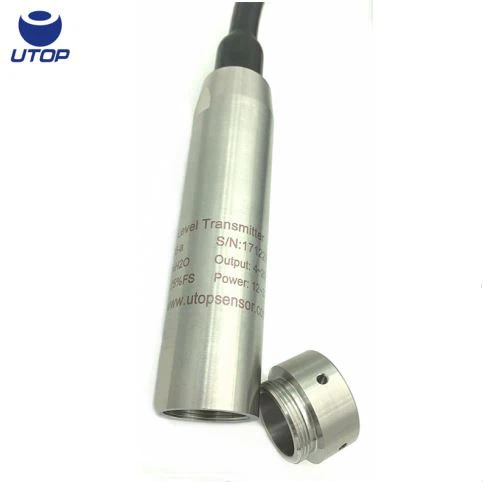
Ultrasonic Oil Level Sensors
Another type is the ultrasonic oil level sensor. These sensors use ultrasonic waves to measure the distance between the sensor and the oil surface. The sensor emits a high - frequency ultrasonic pulse, which travels through the air or oil and reflects off the oil surface.
The sensor then measures the time it takes for the pulse to return. Based on the speed of sound in the medium (air or oil), the ECU can calculate the distance to the oil surface and thus determine the oil level.
The ultrasonic sensor sends the time - of - flight data to the ECU. The ECU processes this data and uses it to estimate the oil level. Just like with the capacitive sensor, the ECU can use this information to take appropriate action if the oil level is abnormal.
Resistive Oil Level Sensors
Resistive oil level sensors work on the principle of resistance. They typically have a float attached to a variable resistor. As the oil level rises or falls, the float moves up or down, changing the position of the wiper on the resistor.
This change in position alters the resistance of the circuit. The sensor measures the resistance and sends a corresponding electrical signal to the ECU. The ECU interprets this signal as an indication of the oil level.
Communication Protocols
Now, let's talk about the communication protocols used between the sensor and the ECU. One of the most common protocols in automotive applications is the Controller Area Network (CAN) protocol.
CAN is a serial communication protocol that allows multiple electronic devices, like sensors and actuators, to communicate with each other over a single bus. The oil level sensor sends its data as a message on the CAN bus, and the ECU listens for these messages.
CAN has several advantages. It's highly reliable, can handle high - speed data transfer, and is resistant to electrical interference. This makes it ideal for use in the noisy environment of a vehicle's engine compartment.
Another protocol that might be used is the Local Interconnect Network (LIN). LIN is a simpler and more cost - effective alternative to CAN. It's often used for less critical systems in the vehicle, like door locks or seat adjustments. However, some oil level sensors might use LIN if the communication requirements are not as demanding.
Importance of Accurate Communication
Accurate communication between the oil level sensor and the ECU is crucial for the proper functioning of the vehicle. If the sensor fails to send the correct data, the ECU might not be able to detect low oil levels in time, which can lead to engine damage.
On the other hand, false readings can also be a problem. A sensor that reports a low oil level when the oil is actually fine can cause unnecessary maintenance and inconvenience for the vehicle owner.
That's why it's important to use high - quality sensors. At our company, we take great pride in manufacturing Oil Level Sensors that are accurate, reliable, and durable. Our sensors are designed to withstand the harsh conditions of the engine environment, including high temperatures, vibrations, and exposure to oil and other chemicals.
We also offer a range of other level sensors, such as the PVDF Housing Level Transmitter and the Submersible Level Sensor/transducer, which can be used in various industrial and automotive applications.
Why Choose Our Oil Level Sensors?
Our sensors are rigorously tested to ensure they meet the highest standards of quality. We use the latest technology and manufacturing processes to produce sensors that are both accurate and long - lasting.
We understand that different vehicles and applications have different requirements. That's why we offer a variety of sensor options, so you can choose the one that best suits your needs. Whether you're a car manufacturer, a maintenance shop, or an individual vehicle owner, we have the right oil level sensor for you.
If you're in the market for an oil level sensor or have any questions about how they work, don't hesitate to reach out. We're here to help you make the right choice for your vehicle or application. Contact us to start a discussion about your procurement needs, and we'll work with you to find the perfect solution.
References
- Automotive Sensor Handbook, Second Edition by Helmut Reichart
- Modern Automotive Technology by James D. Halderman