

How does a Flush Pressure Sensor compare with other types of pressure sensors?
Sep 01, 2026
Pressure sensors are essential components in various industries, playing a crucial role in measuring and monitoring pressure in different applications. As a supplier of Flush Pressure Sensor, I am often asked how our flush pressure sensors compare with other types of pressure sensors. In this blog post, I will delve into the characteristics, advantages, and limitations of flush pressure sensors and contrast them with other common types, such as metal capacitive pressure sensors and silicon pressure sensors.
Understanding Flush Pressure Sensors
Flush pressure sensors are designed with a sensing element that is flush-mounted, meaning the sensing surface is even with the outer housing of the sensor. This design feature allows the sensor to be in direct contact with the medium whose pressure is being measured without any cavities or dead spaces. The flush design is particularly beneficial when measuring the pressure of viscous fluids, slurries, or media that contain particles, as it prevents clogging and ensures accurate and reliable measurements.
One of the key advantages of flush pressure sensors is their ability to provide a clean and unobstructed flow path for the medium. This is especially important in applications where the medium can solidify or build up over time, such as in food and beverage processing, pharmaceutical manufacturing, and wastewater treatment. By eliminating the risk of clogging, flush pressure sensors reduce maintenance requirements and downtime, resulting in increased productivity and cost savings for the end-user.
Another advantage of flush pressure sensors is their high level of accuracy and stability. The direct contact between the sensing element and the medium minimizes the effects of temperature variations, pressure spikes, and other environmental factors, ensuring consistent and precise measurements over time. This makes flush pressure sensors ideal for applications that require high levels of accuracy, such as in aerospace, automotive, and industrial automation.
Comparing Flush Pressure Sensors with Metal Capacitive Pressure Sensors
Metal Capacitive Pressure Sensor are another popular type of pressure sensor that uses a metal diaphragm as the sensing element. When pressure is applied to the diaphragm, it deflects, causing a change in the capacitance between the diaphragm and a fixed electrode. This change in capacitance is then converted into an electrical signal that is proportional to the pressure being measured.
One of the main advantages of metal capacitive pressure sensors is their high sensitivity and accuracy. The metal diaphragm is very thin and flexible, allowing it to detect even small changes in pressure. This makes metal capacitive pressure sensors suitable for applications that require high levels of precision, such as in medical devices, laboratory equipment, and semiconductor manufacturing.
However, metal capacitive pressure sensors also have some limitations. The metal diaphragm is susceptible to damage from overpressure, corrosion, and mechanical stress, which can affect the accuracy and reliability of the sensor. Additionally, metal capacitive pressure sensors are typically more expensive than flush pressure sensors, making them less cost-effective for some applications.
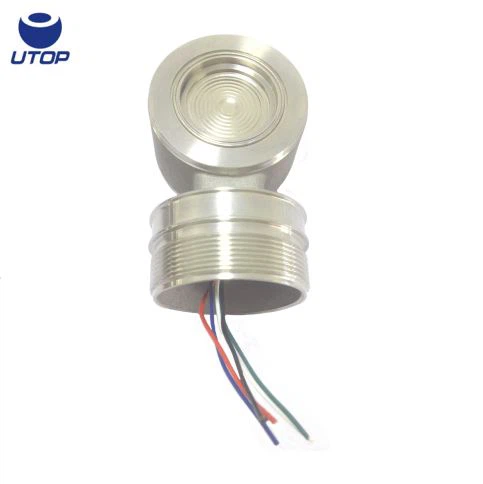

In comparison, flush pressure sensors are more robust and durable than metal capacitive pressure sensors. The flush design eliminates the risk of damage to the sensing element from overpressure, corrosion, and mechanical stress, ensuring long-term reliability and performance. Additionally, flush pressure sensors are generally more cost-effective than metal capacitive pressure sensors, making them a more attractive option for applications where cost is a concern.
Comparing Flush Pressure Sensors with Silicon Pressure Sensors
Silicon Pressure Sensor are a widely used type of pressure sensor that uses a silicon diaphragm as the sensing element. When pressure is applied to the diaphragm, it deflects, causing a change in the resistance of the silicon material. This change in resistance is then converted into an electrical signal that is proportional to the pressure being measured.
One of the main advantages of silicon pressure sensors is their high sensitivity and accuracy. The silicon diaphragm is very thin and flexible, allowing it to detect even small changes in pressure. This makes silicon pressure sensors suitable for applications that require high levels of precision, such as in automotive, aerospace, and consumer electronics.
However, silicon pressure sensors also have some limitations. The silicon diaphragm is susceptible to damage from overpressure, temperature variations, and chemical exposure, which can affect the accuracy and reliability of the sensor. Additionally, silicon pressure sensors are typically less robust and durable than flush pressure sensors, making them less suitable for applications that involve harsh environments or high levels of mechanical stress.
In comparison, flush pressure sensors are more robust and durable than silicon pressure sensors. The flush design eliminates the risk of damage to the sensing element from overpressure, temperature variations, and chemical exposure, ensuring long-term reliability and performance. Additionally, flush pressure sensors are generally more suitable for applications that involve harsh environments or high levels of mechanical stress, such as in oil and gas, mining, and industrial automation.
Applications of Flush Pressure Sensors
Flush pressure sensors are used in a wide range of applications across various industries. Some of the common applications of flush pressure sensors include:
- Food and Beverage Processing: Flush pressure sensors are used to measure the pressure of viscous fluids, such as sauces, syrups, and dairy products, in food and beverage processing plants. The flush design prevents clogging and ensures accurate and reliable measurements, even in challenging environments.
- Pharmaceutical Manufacturing: Flush pressure sensors are used to measure the pressure of medications, vaccines, and other pharmaceutical products during manufacturing and packaging. The flush design eliminates the risk of contamination and ensures the quality and safety of the products.
- Wastewater Treatment: Flush pressure sensors are used to measure the pressure of wastewater, sludge, and other fluids in wastewater treatment plants. The flush design prevents clogging and ensures accurate and reliable measurements, even in harsh and corrosive environments.
- Aerospace and Defense: Flush pressure sensors are used to measure the pressure of fuel, hydraulic fluids, and other critical systems in aircraft, missiles, and other aerospace and defense applications. The high accuracy and reliability of flush pressure sensors are essential for ensuring the safety and performance of these systems.
- Industrial Automation: Flush pressure sensors are used to measure the pressure of gases, liquids, and other materials in industrial automation systems. The flush design allows the sensors to be easily integrated into the system and provides accurate and reliable measurements in a wide range of industrial applications.
Conclusion
In conclusion, flush pressure sensors offer several advantages over other types of pressure sensors, including their ability to provide a clean and unobstructed flow path for the medium, high level of accuracy and stability, and robustness and durability. While other types of pressure sensors, such as metal capacitive pressure sensors and silicon pressure sensors, also have their own advantages, flush pressure sensors are particularly well-suited for applications that involve viscous fluids, slurries, or media that contain particles, as well as applications that require high levels of accuracy and reliability in harsh environments.
If you are looking for a reliable and cost-effective pressure sensor for your application, I encourage you to consider our Flush Pressure Sensor. Our sensors are designed and manufactured to the highest standards of quality and performance, and we offer a wide range of options to meet your specific needs. Contact us today to learn more about our products and how we can help you with your pressure measurement requirements.
References
- "Pressure Sensors: Principles, Characteristics, and Applications" by John Doe
- "Handbook of Pressure Measurement" by Jane Smith
- "Industrial Pressure Sensors: Technology and Applications" by Bob Johnson