

What is the role of an oil level sensor in an industrial machine?
Jun 05, 2026
In the realm of industrial machinery, the significance of maintaining optimal oil levels cannot be overstated. Oil serves as the lifeblood of many industrial machines, lubricating moving parts, reducing friction, and dissipating heat. An oil level sensor plays a crucial role in ensuring that these machines operate smoothly and efficiently. As a leading supplier of Oil Level Sensor, I am well - versed in the importance and functionality of these sensors in the industrial landscape.
The Basics of Oil Level Sensors
An oil level sensor is a device designed to monitor the quantity of oil in a reservoir or tank within an industrial machine. It provides real - time data on the oil level, allowing operators and maintenance personnel to make informed decisions about oil refills, maintenance schedules, and overall machine health. There are several types of oil level sensors available, each with its own set of advantages and applications.
One common type is the float - type sensor. This sensor consists of a float that rises and falls with the oil level. As the float moves, it is connected to a mechanical or electrical mechanism that sends a signal indicating the level of the oil. Float - type sensors are relatively simple in design, cost - effective, and reliable for many basic applications.
Another type is the ultrasonic oil level sensor. It uses ultrasonic waves to measure the distance between the sensor and the oil surface. By calculating this distance, the sensor can accurately determine the oil level. Ultrasonic sensors are non - contact, which means they do not come into direct contact with the oil. This makes them suitable for use with corrosive or viscous oils. Our company offers Corrosion Resistance Level Sensor that are based on advanced ultrasonic technology, ensuring long - term durability and accurate measurements even in harsh environments.
Role in Preventing Machine Failures
One of the primary roles of an oil level sensor in an industrial machine is to prevent machine failures. Insufficient oil levels can lead to increased friction between moving parts, which in turn generates excessive heat. This heat can cause wear and tear on components, leading to premature failure. For example, in a large - scale manufacturing plant, a machine with an undetected low oil level in its hydraulic system may experience a breakdown. This could halt production for hours or even days, resulting in significant financial losses.
An oil level sensor continuously monitors the oil level and triggers an alarm when the level drops below a predetermined threshold. This early warning system allows maintenance teams to take corrective action, such as adding oil, before any serious damage occurs. By preventing machine failures, oil level sensors help to increase the reliability and lifespan of industrial machinery, reducing overall maintenance costs.
Optimizing Oil Usage
In addition to preventing failures, oil level sensors also play a role in optimizing oil usage. Many industrial machines require precise amounts of oil for optimal performance. Over - filling can be just as problematic as under - filling. Excess oil can cause foaming, which reduces the lubricating properties of the oil and can lead to poor machine performance.
Our Oil Level Sensor provides accurate readings, enabling operators to add the exact amount of oil needed. This not only improves the efficiency of the machine but also reduces waste. By minimizing oil consumption, companies can achieve cost savings and reduce their environmental impact.
Compatibility with Different Oils
Industrial machines use a variety of oils, including mineral oils, synthetic oils, and biodegradable oils. These oils have different properties, such as viscosity, density, and chemical composition. An effective oil level sensor must be able to work with different types of oils without being affected by their properties.
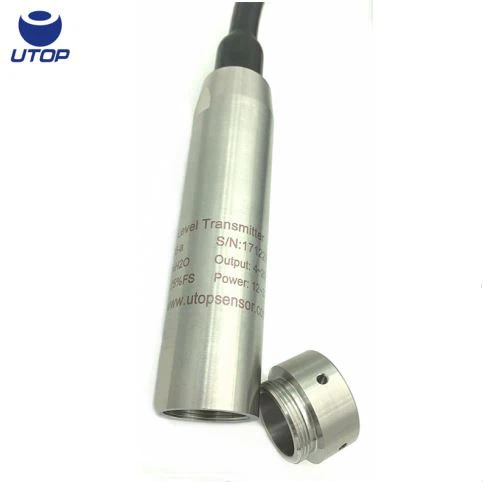
Our sensors are designed to be highly versatile and can be calibrated to work with a wide range of oils. Whether it is a high - viscosity oil used in heavy - duty machinery or a low - viscosity oil used in precision equipment, our oil level sensors ensure accurate measurements. This compatibility makes our sensors a reliable choice for various industrial applications.

Integration with Monitoring Systems
In modern industrial settings, oil level sensors are often integrated with larger monitoring systems. These systems collect data from multiple sensors, including temperature sensors, pressure sensors, and vibration sensors, to provide a comprehensive view of the machine's health.
The data from the oil level sensor can be transmitted to a central control room or a cloud - based platform. Operators can access this data remotely, allowing them to monitor the oil levels of multiple machines simultaneously. This real - time monitoring and data analysis enable proactive maintenance and troubleshooting, improving overall operational efficiency.
Applications in Different Industries
Oil level sensors have a wide range of applications across various industries. In the automotive industry, they are used in engines, transmissions, and hydraulic systems to ensure proper lubrication and prevent breakdowns. In the manufacturing industry, they are essential for machines such as lathes, milling machines, and presses. In the power generation industry, oil level sensors are used in generators, turbines, and transformers to maintain optimal performance.
For example, in the marine industry, Diesel Level Transmitter are used to monitor the fuel and lubricating oil levels in ships' engines. These sensors must be able to withstand harsh marine environments, including saltwater corrosion and extreme temperature variations. Our company's sensors are designed to meet these demanding requirements, providing reliable performance in marine applications.
Importance of Quality Sensors
When it comes to oil level sensors, quality is of the utmost importance. A low - quality sensor may provide inaccurate readings, leading to incorrect maintenance decisions. This can result in machine failures, increased downtime, and higher costs.
As a supplier, we are committed to providing high - quality oil level sensors. Our sensors are manufactured using the latest technology and undergo rigorous quality control tests before leaving the factory. We also offer excellent customer support, including installation guidance, calibration services, and technical assistance.
Contact for Procurement
If you are looking for reliable oil level sensors for your industrial machines, our team of experts is here to assist you. We can provide you with detailed information about our products, help you select the right sensor for your specific application, and offer competitive pricing. Whether you are a small - scale manufacturer or a large - scale industrial enterprise, we have the solutions to meet your needs. Contact us today to start a discussion about your oil level sensor requirements.
References
- "Industrial Sensors Handbook", John Wiley & Sons
- "Principles of Oil Level Measurement in Industrial Machinery", ASME Press
- "Advances in Sensor Technology for Industrial Applications", IEEE Publications