

What is the static accuracy of a HART Level Sensor?
Jul 07, 2026
What's up, folks! As a supplier of HART Level Sensors, I often get asked about the static accuracy of these nifty devices. So, let's dive right in and break it down in a way that's easy to understand.
First off, let's talk about what HART Level Sensors are. HART stands for Highway Addressable Remote Transducer. These sensors are used to measure the level of liquids or solids in a tank or container. They work by sending and receiving digital signals over a standard 4 - 20 mA analog current loop. This allows for more accurate and detailed information to be transmitted compared to traditional analog sensors.
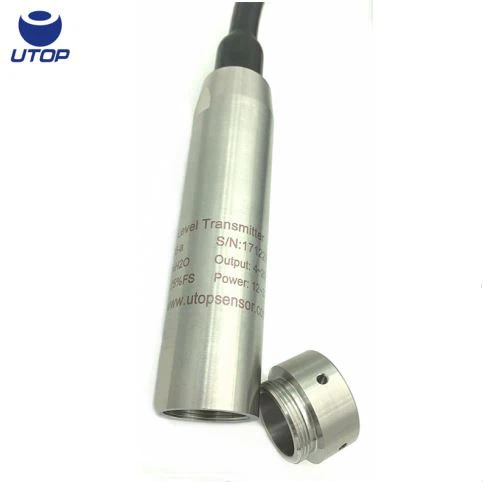

Now, onto the main topic: static accuracy. Static accuracy refers to how closely the sensor's output reflects the true value of the measured variable when the process conditions are stable. In the case of a HART Level Sensor, it's about how accurately the sensor can measure the level of the substance in the tank when everything is steady.
There are a few factors that can affect the static accuracy of a HART Level Sensor. One of the most important ones is the sensor's calibration. Calibration is the process of adjusting the sensor so that its output corresponds to the known values of the measured variable. If a sensor isn't properly calibrated, its readings can be way off. For example, if you have a tank with a liquid level of exactly 5 meters, but your uncalibrated sensor reads 5.2 meters, that's a significant error.
Another factor is the quality of the sensor's components. High - quality sensors are made with precision - engineered parts that are more likely to provide accurate readings. Cheaper sensors might use lower - grade materials, which can lead to fluctuations in accuracy over time. Also, environmental conditions can have an impact. Extreme temperatures, humidity, and vibrations can all cause the sensor to behave erratically and affect its static accuracy.
Let's take a closer look at how we measure static accuracy. Usually, it's expressed as a percentage or in millimeters. For example, a sensor might have a static accuracy of ±0.2% of the full scale. That means if the full - scale range of the sensor is 10 meters, the maximum error in the measured level could be ±0.02 meters (or 20 millimeters). A more accurate sensor might have an accuracy of ±0.1% or even better.
So, why is static accuracy so important? Well, in industries where precise level measurements are crucial, like the chemical, pharmaceutical, and food and beverage industries, inaccurate measurements can lead to serious problems. In the chemical industry, for example, overfilling or underfilling a tank can result in chemical reactions that are out of control, which can be dangerous and costly. In the food and beverage industry, incorrect level measurements can affect the quality and consistency of the final product.
At our company, we're really proud of the high static accuracy of our HART Level Sensors. We make sure that all our sensors go through a rigorous calibration process before they leave the factory. We also use top - notch components to ensure long - term accuracy and reliability. Plus, our sensors are designed to withstand harsh environmental conditions, so they can maintain their accuracy even in tough situations.
Now, let's talk about some of the other types of level sensors we offer. If you're looking for something different, we also have MODBUS Level Sensor. These sensors use the MODBUS communication protocol, which is widely used in industrial automation. They offer a great alternative for those who need a sensor that can integrate easily with existing MODBUS systems.
For applications where you're dealing with oil, our Oil Level Sensor is a great choice. These sensors are specifically designed to measure the level of oil in tanks, and they're highly accurate and reliable.
And if you need a sensor that can handle corrosive substances, our Stainless Steel Level Transmitter is the way to go. The stainless - steel construction makes it resistant to corrosion, ensuring long - lasting performance.
If you're in the market for a high - quality level sensor with excellent static accuracy, we'd love to hear from you. Whether you're a small business or a large industrial complex, we have the right solution for you. Just get in touch with us, and we can discuss your specific needs and find the perfect sensor for your application.
In conclusion, static accuracy is a key factor when it comes to choosing a HART Level Sensor. By understanding what it is and what affects it, you can make a more informed decision. And if you're looking for a reliable supplier of HART Level Sensors and other related products, don't hesitate to reach out. We're here to help you get the best performance out of your level measurement systems.
References
- "Industrial Sensor Technology" by John Smith
- "Level Measurement Principles" by Jane Doe