

How does an oil level sensor work in a waste - oil collection system?
Jan 19, 2026
Hey there! As a supplier of oil level sensors, I often get asked about how these nifty devices work, especially in a waste - oil collection system. So, I thought I'd take a few minutes to break it down for you.
First off, let's talk about why we even need oil level sensors in a waste - oil collection system. Waste oil is a by - product of many industrial and automotive processes. It needs to be collected properly to prevent environmental contamination and to be recycled or disposed of safely. Knowing the level of waste oil in a collection tank is crucial. If the tank overflows, it can lead to a huge mess and potential legal issues. On the other hand, if you don't know when the tank is almost empty, you might miss the opportunity to optimize collection routes and save on costs.
Now, let's dive into how these sensors actually work. There are several types of oil level sensors, but I'll focus on some of the most common ones used in waste - oil collection systems.
Float - type Oil Level Sensors
Float - type sensors are one of the oldest and simplest designs. They work on a pretty straightforward principle. There's a float, which is a buoyant object, usually made of plastic or metal. This float is attached to a rod or an arm. As the oil level in the tank rises or falls, the float moves up or down with it.
The movement of the float is then translated into an electrical signal. For example, the rod attached to the float can be connected to a potentiometer. A potentiometer is a variable resistor. As the rod moves, it changes the resistance of the potentiometer. This change in resistance can be measured and converted into a signal that indicates the oil level.
The advantage of float - type sensors is that they're relatively inexpensive and easy to install. However, they do have some limitations. They can get stuck if there's debris in the tank or if the float gets damaged. Also, they're not very accurate for measuring small changes in oil level.
Ultrasonic Oil Level Sensors
Ultrasonic sensors are a bit more high - tech. They use sound waves to measure the distance between the sensor and the oil surface. The sensor emits a high - frequency ultrasonic pulse. This pulse travels through the air in the tank and reflects off the oil surface. The sensor then measures the time it takes for the pulse to return.
Since the speed of sound in air is known, the sensor can calculate the distance to the oil surface based on the time of flight of the ultrasonic pulse. Once the distance to the oil surface is known, the sensor can determine the oil level in the tank.
The great thing about ultrasonic sensors is that they're non - contact. They don't need to be in direct contact with the oil, which means they're less likely to get damaged by the oil or any contaminants in it. They're also very accurate and can measure oil levels in real - time. However, they can be affected by factors like temperature and humidity, which can change the speed of sound in air.
Capacitive Oil Level Sensors
Capacitive sensors are another popular choice. They work based on the principle of capacitance. Capacitance is the ability of a system to store an electric charge. In a capacitive oil level sensor, there are two electrodes. When the sensor is installed in the tank, the space between the electrodes is filled with a combination of air and oil.
Oil and air have different dielectric constants. The dielectric constant is a measure of how well a material can store electrical energy in an electric field. As the oil level changes, the proportion of oil and air between the electrodes changes. This causes a change in the capacitance of the sensor.
The sensor measures this change in capacitance and converts it into a signal that represents the oil level. Capacitive sensors are very sensitive and can detect small changes in oil level. They're also relatively immune to vibration and shock. However, they can be affected by the presence of conductive contaminants in the oil.
Guided Wave Radar Oil Level Sensors
Guided wave radar sensors use radar technology to measure the oil level. They send a radar signal down a probe that is inserted into the tank. The radar signal travels along the probe and reflects off the oil surface. The time it takes for the signal to return is measured, and based on this time, the distance to the oil surface is calculated.
The advantage of guided wave radar sensors is that they're very accurate and can work in a wide range of conditions. They're not affected by factors like temperature, pressure, or the presence of foam on the oil surface. However, they're more expensive than some of the other types of sensors.
How These Sensors Fit into a Waste - Oil Collection System
In a waste - oil collection system, the oil level sensors are usually connected to a control unit. This control unit can be a simple display that shows the oil level in the tank, or it can be a more complex system that can send alerts when the oil level reaches a certain threshold.

For example, if the oil level in a waste - oil tank gets too high, the control unit can send an alert to the collection company. The collection company can then schedule a pickup to empty the tank before it overflows. On the other hand, if the oil level is too low, the control unit can help optimize the collection routes to save on fuel and labor costs.
Our Product Range
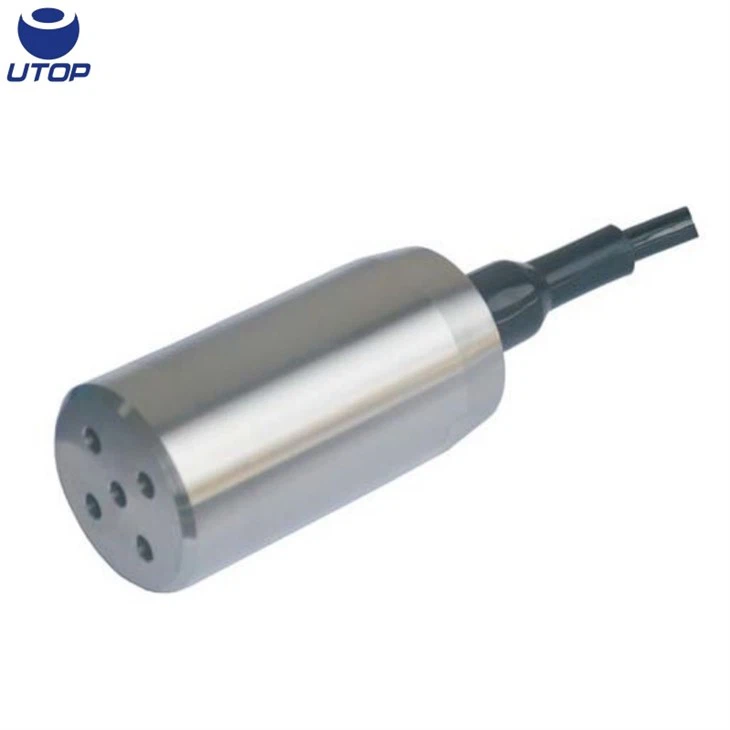
As an oil level sensor supplier, we offer a wide range of sensors to meet different needs. We have Liquid Level Sensor which are suitable for various liquid applications, including waste oil. These sensors are designed to be accurate and reliable.
Our Ceramic Capacitive Level Transmitter is another great option. It uses advanced ceramic capacitive technology to provide precise level measurements. It's durable and can withstand harsh environments.
We also have MODBUS Level Transmitter. These transmitters are compatible with MODBUS communication protocols, which makes it easy to integrate them into existing control systems.
Conclusion
So, there you have it! That's how oil level sensors work in a waste - oil collection system. Whether you're looking for a simple and inexpensive float - type sensor or a high - tech ultrasonic or radar sensor, we've got you covered.
If you're in the market for an oil level sensor for your waste - oil collection system, don't hesitate to reach out. We can help you choose the right sensor for your specific needs and provide you with all the support you need. Let's work together to make your waste - oil collection process more efficient and reliable.
References
- "Industrial Level Measurement Handbook", Second Edition, by Peter W. Spitzer
- "Sensors and Actuators: A Comprehensive Guide", by John Wilson